
Food & Tapas Culture in Spain: A Delicious Guide for Travelers


If Spain had a love language, it would be food. I discovered this in 2013, when I took my first steps outside the United States (Mexico doesn’t count, right?) and landed in Madrid, Spain. I dove straight into Spanish culture thanks to a girl named Kelly, a local to Madrid. Through Couchsurfing, I met Kelly, who graciously offered to take me and a small group of fellow twenty-somethings on a whirlwind tour around her city. What resonated with me wasn’t just the beauty of Madrid’s landmarks and iconic sights, but the rhythm of the day itself—the periodic pauses for coffee, a small bite, or a quick drink. At first it felt foreign, this rhythm of stopping and savoring, but soon I realized it wasn’t about the snacks—it was about connection. In those moments, as we laughed, shared our stories and listened to Kelly explain her culture, I began to understand Spain through its table. Spanish cuisine is as much about community as it is about flavor. To truly understand Spain, you need to experience its food culture, and at the heart of it all is the tapas tradition.
What Are Tapas, Exactly?

Tapas are small plates of food, often shared among friends, meant to be enjoyed alongside a drink. But tapas are more than just snacks—they’re a way of life.
- Origins: The word tapa means “cover” or “lid.” I learned that bartenders used slices of bread or ham to cover drinks and keep flies away. Practical, tasty, and now iconic.
- Variety: Tapas can be as simple as a bowl of olives or as elaborate as grilled octopus drizzled with olive oil. Every region puts its own twist on them.
The Culture of Sharing

In Spain, food is communal. Ordering tapas isn’t about one dish per person—it’s about ordering several plates for the table and sharing together. This fosters conversation, laughter, and a relaxed pace of eating. If you’re a traveler, don’t be shy—tap into the local rhythm and order a spread to share.
How to Do Tapas Like a Local
- Hop, Don’t Stop – Tapas Crawl!: True tapas culture is about tapeo—hopping from bar to bar. Order a drink and one or two tapas, then move on. It keeps things lively and varied. My sister called it a “Tapas Crawl”!
- Stand and Mingle: Many locals eat standing at crowded bars, balancing a plate in one hand and a drink in the other. Don’t expect white tablecloths—expect atmosphere.
- Pair with Drinks: Tapas are meant to be enjoyed with something to sip on, whether it’s a glass of Rioja, a refreshing tinto de verano, or a cold beer – or of course, Sangria.
- Try the House Specialty: Every bar usually has a signature tapa. Ask the bartender what they’re known for—it’s often the best item on the menu.
Regional Tapas Highlights
Spain is wonderfully diverse, and so is its food. Here are some regional Tapas highlights I learned myself and also from other friends who have traveled Spain:


- Andalusia: The birthplace of tapas. Expect classics like jamón ibérico, fried fish (pescaíto frito), and salmorejo.
- Madrid: Known for hearty tapas—think patatas bravas (my favorite!), chorizo, and croquettes.
- Basque Country: Here, tapas are called pintxos (or pinchos)—bite-sized creations often skewered with toothpicks.
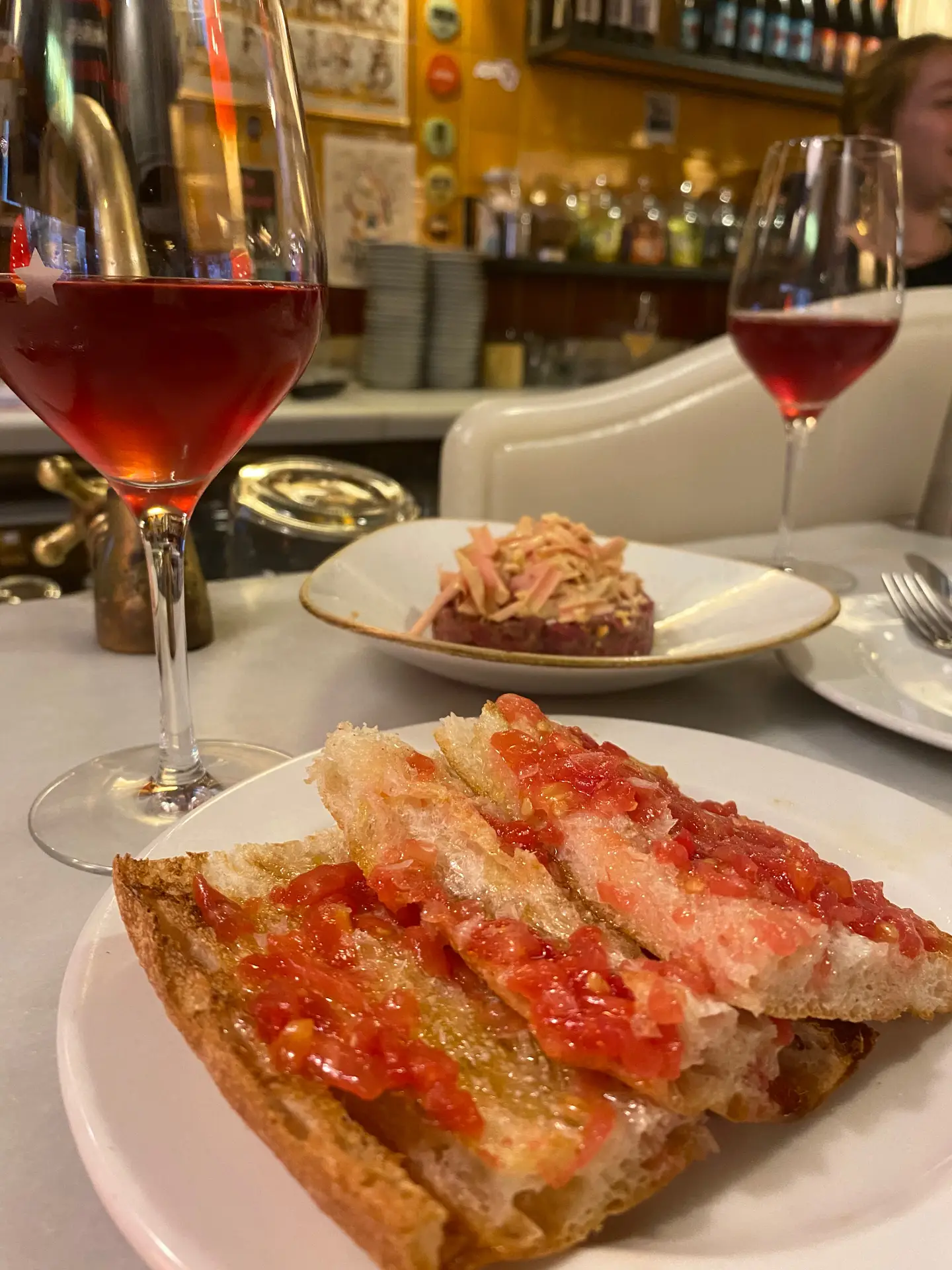
- Catalonia: Fresh seafood, grilled vegetables, and plenty of Mediterranean flair. Try pan con tomate (bread rubbed with tomato and olive oil).
- Galicia: Famous for octopus (pulpo a la gallega), served with paprika, olive oil, and potatoes.
Meal Times & Culture Shock
If you’re visiting from outside Spain, the meal schedule might surprise you:
- Breakfast: Usually light—coffee and toast or a pastry.
- Lunch: The main meal of the day, often three courses, usually between 2–4 P.M.
- Tapas/Early Evening: Perfect for bridging the gap until dinner.
- Dinner: Late and light—often 9–11 P.M. (sometimes even later). This surprised me the most!
Tip: Don’t show up at a restaurant at 6 P.M. and expect a full dinner menu—you’ll probably just find coffee and snacks.
Beyond The Tapas: Spanish Food Culture

While tapas steal the spotlight, Spanish cuisine has plenty more to offer! Here are some of my favorites:
- Paella: Originally from Valencia, this rice dish with saffron and seafood (or meat) is world-famous.
- Churros & Chocolate: A favorite late-night (or early morning) indulgence.
- Market Culture: Visit local markets like Mercado de San Miguel in Madrid or La Boqueria in Barcelona to see the freshest produce, cheeses, meats, and seafood. Bring home some Saffron to make your own Paella at home!
Tips for Travelers

- Don’t Overorder: Portions can be generous. Start small and add more.
- Cash is Handy: Some smaller tapas bars still prefer cash over cards.
- Embrace the Pace: Meals in Spain aren’t rushed. Slow down, savor, and enjoy.
- Learn a Few Phrases: A friendly “¿Qué me recomiendas?” (What do you recommend?) goes a long way. And don’t be rude – say your “gracias”s’ and your “por favor“s’.
Final Bite
Food in Spain isn’t just fuel—it’s the heartbeat of culture, family, and friendship. I am looking forward to the next time I go and sharing the culture with my soon-to-be wife and my family and friends!
So remember this when you go to Spain, go hungry, stay curious, and remember: in Spain, the table is where life happens!

See you out there!